
Website security standards are evolving, and SSL certificate expiration changes are one of the most important updates businesses need to understand right now.
SSL/TLS certificates are the foundation of encrypted web traffic and online trust. They protect customer data, secure transactions, and signal legitimacy to browsers and search engines. But over the next few years, industry rules will dramatically shorten how long these certificates can remain valid, requiring organizations to rethink how they manage security.
At Datotel, we’re helping clients prepare early so these changes don’t turn into outages, compliance issues, or operational headaches.
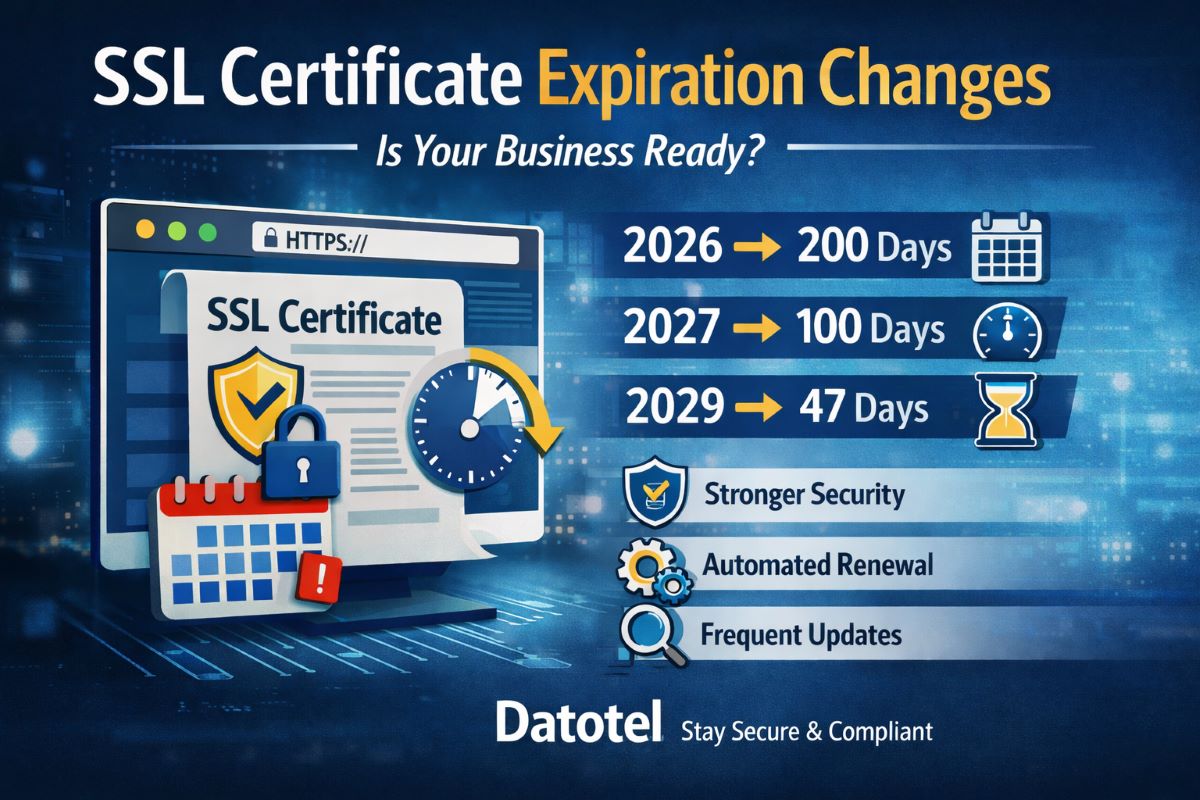
Industry leaders, including browser vendors and certificate authorities, have agreed to reduce the maximum lifespan of publicly trusted SSL/TLS certificates. Previously, certificates were typically valid for about 13 months. That window is now shrinking in phases:
These SSL certificate expiration changes mean certificates will need to be renewed far more frequently, eventually as often as every six to seven weeks.
Shorter certificate lifespans reduce risk. If a certificate or private key is compromised, the window for misuse is much smaller, limiting potential damage.
Certificates contain information about domains and organizations. Frequent renewal ensures that ownership and identity data stays current and trustworthy.
Manual certificate renewal worked when certificates lasted a year. With expiration cycles measured in weeks, automation becomes essential, not optional.
Expired certificates can cause:
As expiration cycles shorten, the risk of missing a renewal increases dramatically without automated systems in place.
Manually tracking dozens (or hundreds) of certificates across websites, applications, and internal services becomes impractical under the new standards.
SSL certificate expiration changes also affect:
Additionally, code signing certificates are seeing reduced validity periods as well, impacting software development and deployment pipelines.
To keep up with SSL certificate expiration changes, businesses must adopt automated certificate management. Automation enables:
Technologies such as ACME-based certificate management allow certificates to be issued, renewed, and deployed automatically, even at high frequency.
Datotel is proactively supporting clients through certificate expiration changes with solutions designed for reliability and peace of mind.
We implement and manage automated renewal systems to ensure certificates are always valid, no manual tracking required.
Our teams continuously monitor certificate inventories and expiration timelines to identify and resolve issues before they impact your business.
Whether your environment is cloud-based, on-premises, or hybrid, Datotel ensures your infrastructure is ready for shorter certificate lifecycles.
We help clients understand how the expiration changes affect their entire environment, not just public websites, and build long-term solutions.
To prepare for SSL certificate expiration changes:
Taking action now avoids rushed changes later, and prevents costly downtime.
SSL certificate expiration changes are a major shift in how online security is managed, but they don’t have to be disruptive. With the right automation, monitoring, and expertise, businesses can improve security while reducing operational risk.
Datotel is here to help you navigate these changes confidently.
Ready to modernize your certificate management? Contact Datotel today to ensure your environment is secure, compliant, and always online.